Recessed vs. Surface-Mounted: A Specification Guide
The ceiling is the fifth wall. How mounting shapes the architecture of a room.
Architects speak of the ceiling as the fifth wall, and yet it is the surface most often surrendered to whatever the electrician suggests. The choice between recessed and surface-mounted lighting is not a matter of taste alone. It decides whether the ceiling reads as a clean plane or a considered composition.
The case for disappearing
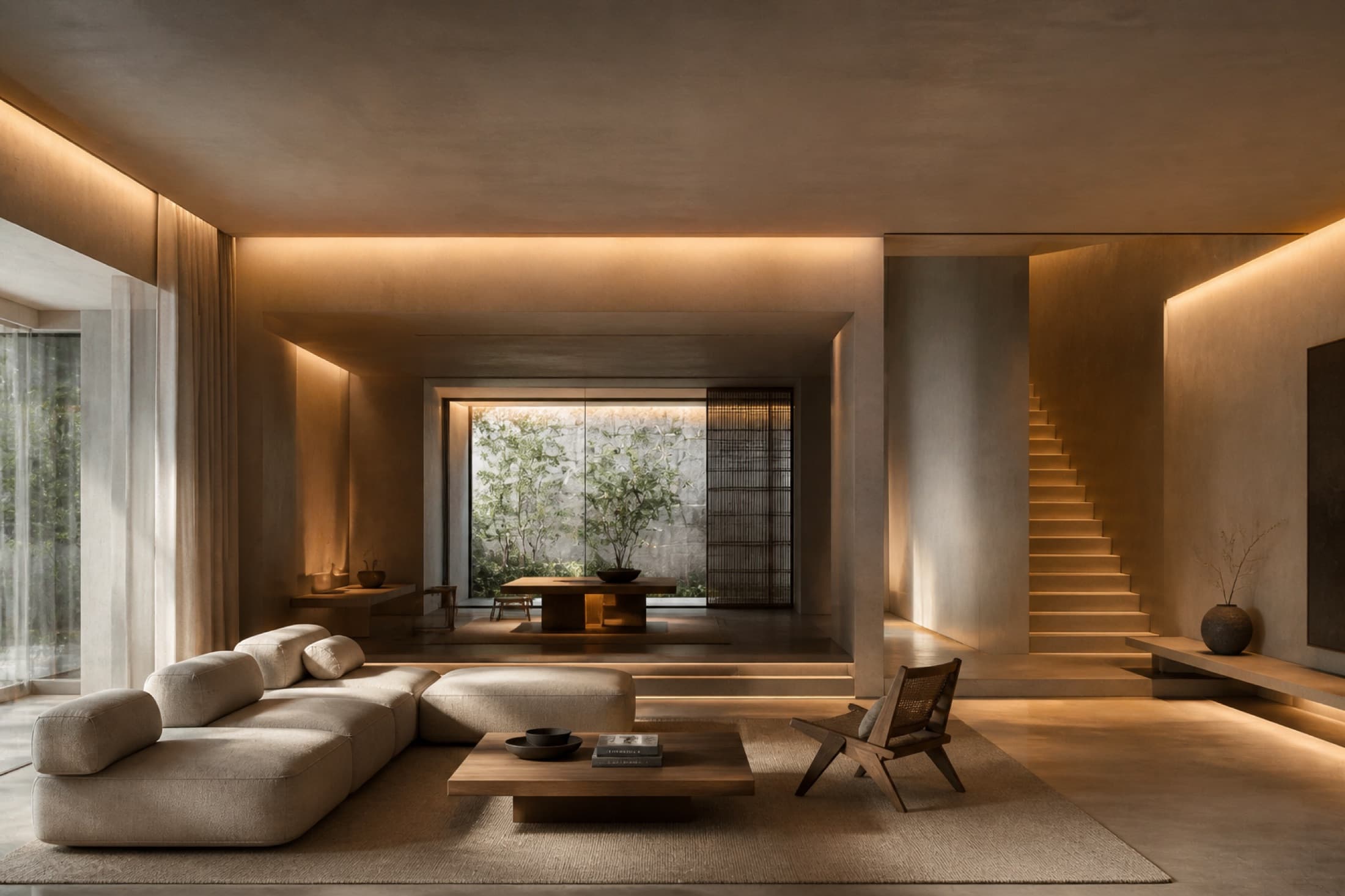
Recessed lighting is the art of the invisible. Done well, with trimless, plaster-in detailing of the kind Kreon and Deltalight have refined for decades, the fixture vanishes into the ceiling and only the light remains. The architecture stays quiet. The eye is given nothing to catch on. In a minimal or contemporary interior, where the discipline is subtraction, this is often the right instinct.
But recessed light demands to be planned early. It needs ceiling depth, coordination with the slab and the services, and a level of precision on site that cannot be improvised after the plaster is up. The best recessed schemes are drawn before the ceiling exists.
A recessed fixture is a decision you make with the architect, not the electrician.
The case for presence
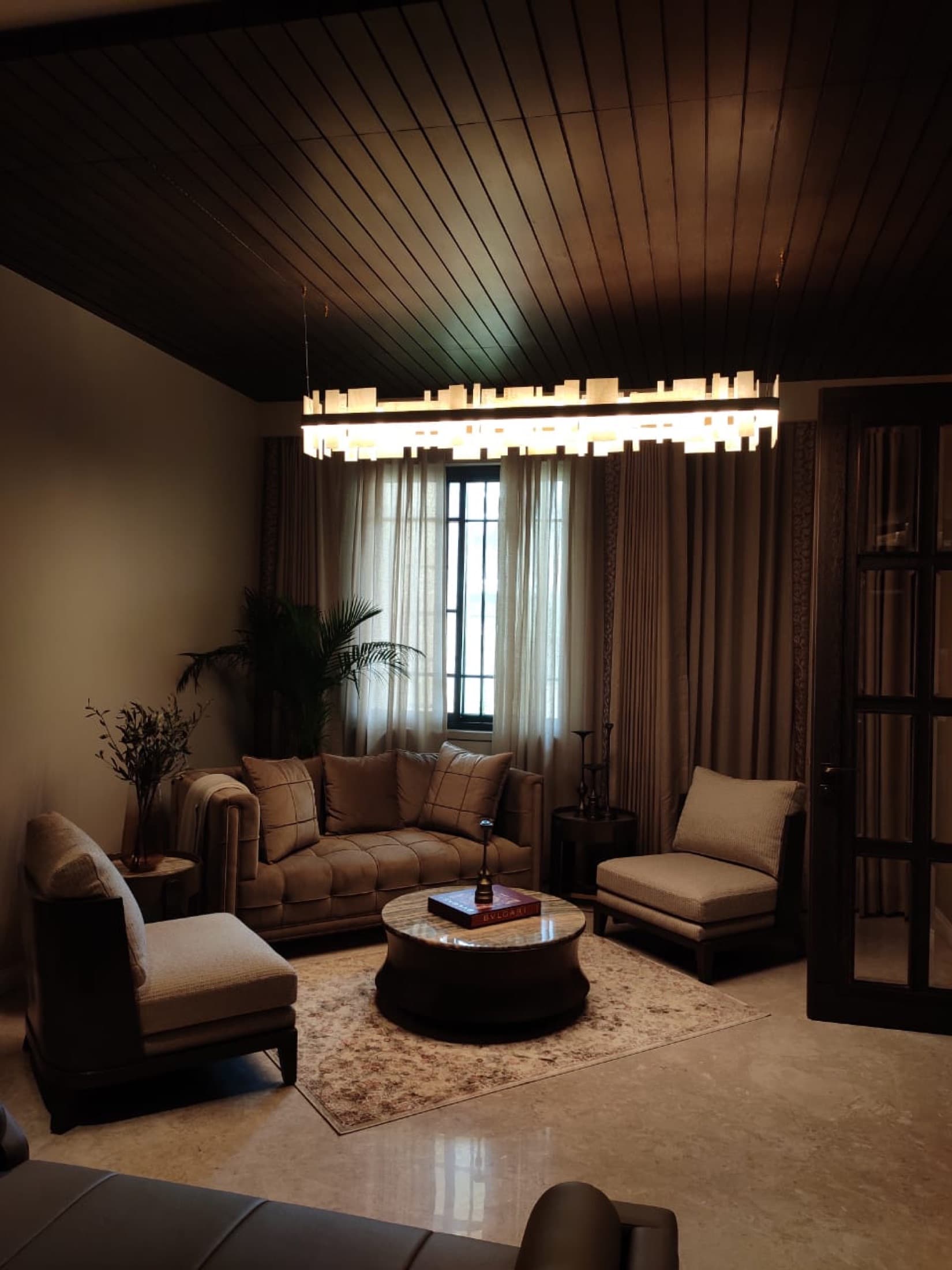
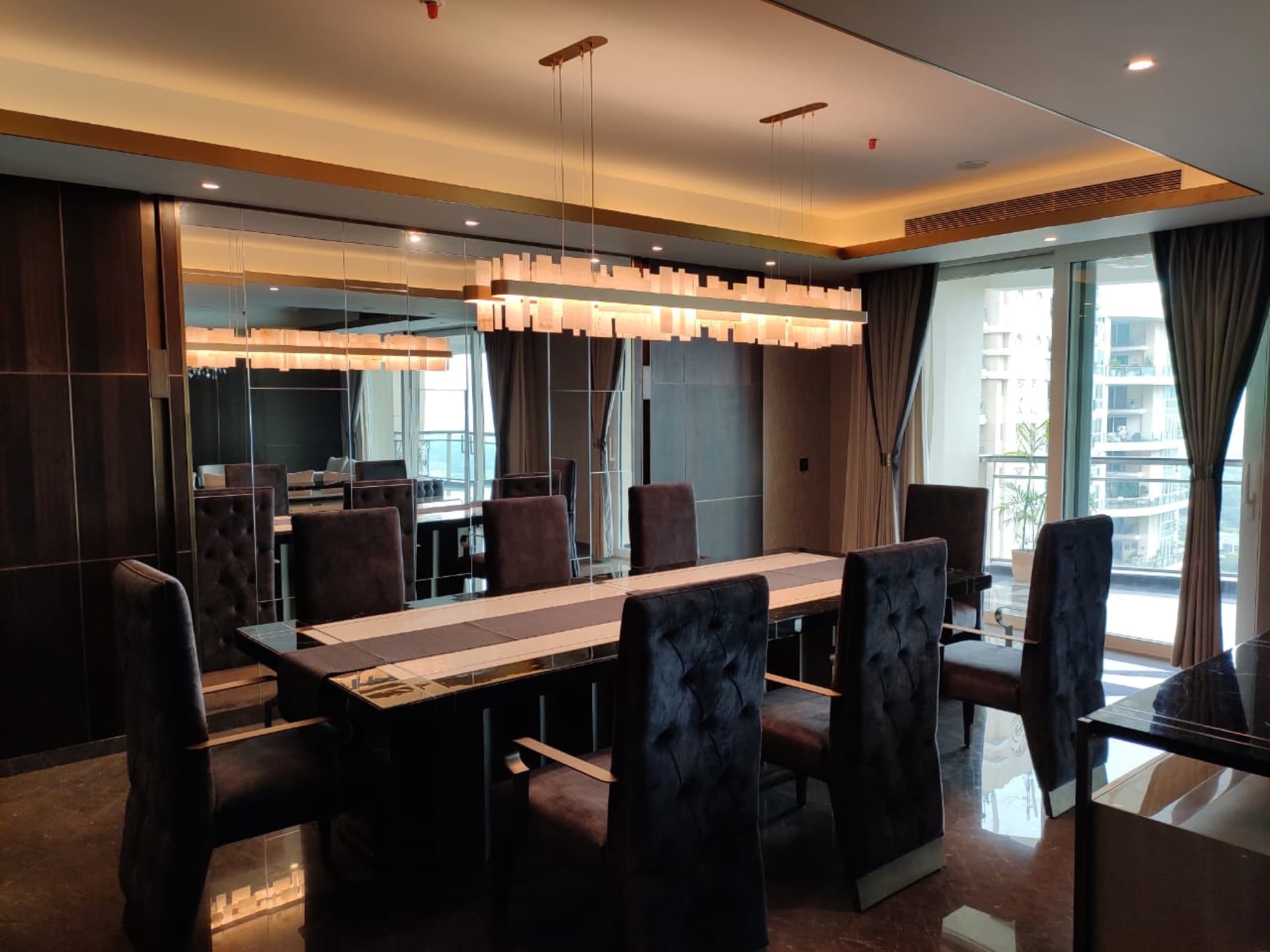
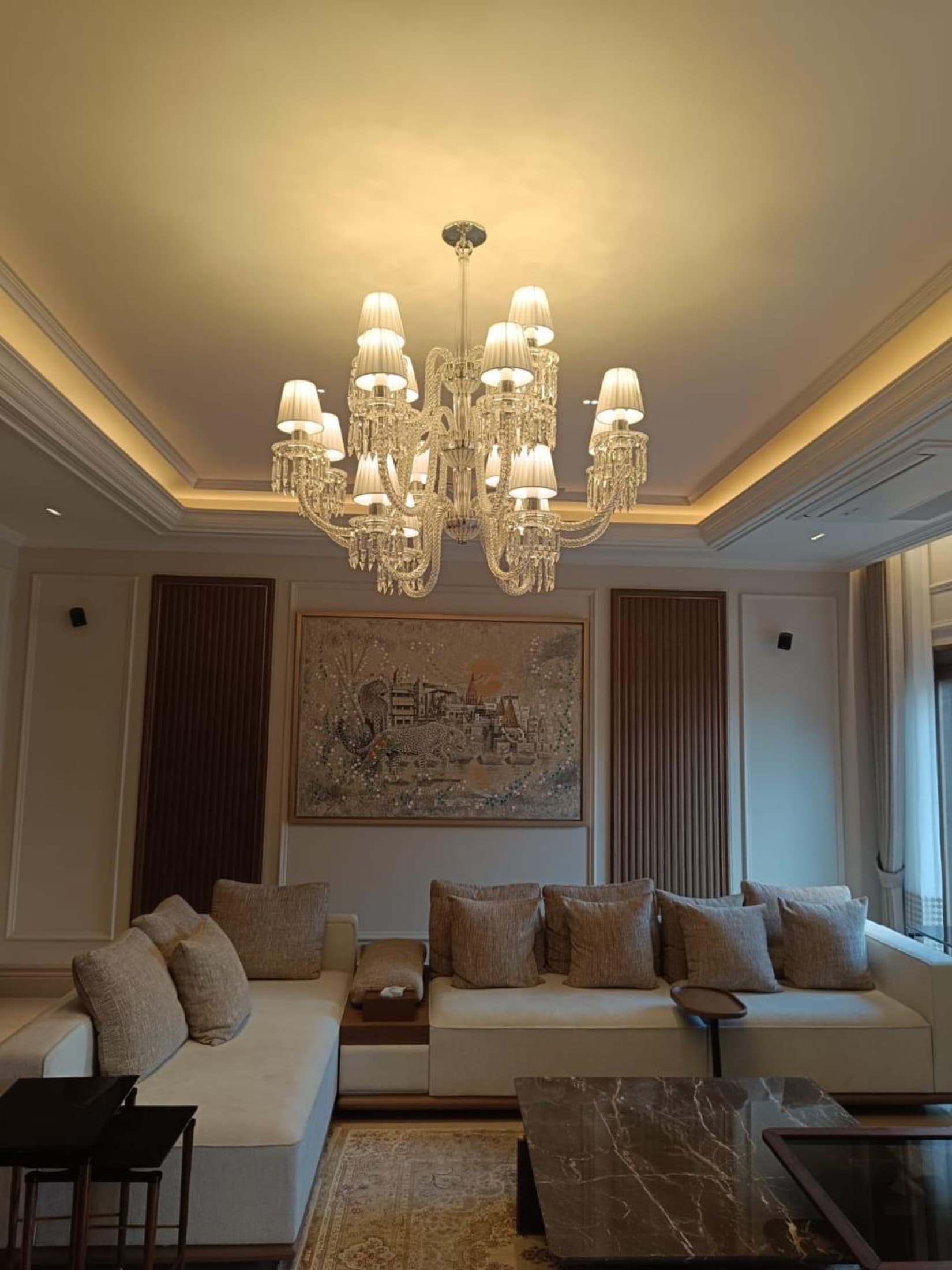
Surface-mounted and suspended fixtures make the opposite argument. Here the fixture is not hidden but celebrated, a chandelier, a sculptural pendant, a linear profile that draws a line across the room. In a space with heritage detailing, generous proportions, or a desire for warmth and character, the object earns its visibility.
Most rooms want both. A quiet field of recessed light to do the work, and one or two expressive fixtures to give the room a centre of gravity. The skill is knowing which decision each part of the ceiling is making, and refusing to let the two blur into a scatter of unrelated fittings.
It is a conversation we have often, and rarely in the abstract. Standing beneath a trimless slot and then beneath a hand-blown pendant, the trade-off explains itself in a way no drawing can.