The Art of Layered Lighting
Ambient, task, and accent. The three layers every considered room is built from.
A single ceiling light in the centre of a room is the most common lighting decision in the world, and one of the least considered. It flattens a space, throws hard shadows under the eyes, and leaves the corners in gloom. The alternative is not more light. It is light arranged in layers.
What is layered lighting?
Layered lighting is the practice of building a room from several distinct sources, each with a different job, rather than lighting it from one bright fixture overhead. A considered scheme works in four layers: ambient, task, accent, and decorative. Understand the roles, and a room stops being lit and starts being composed.
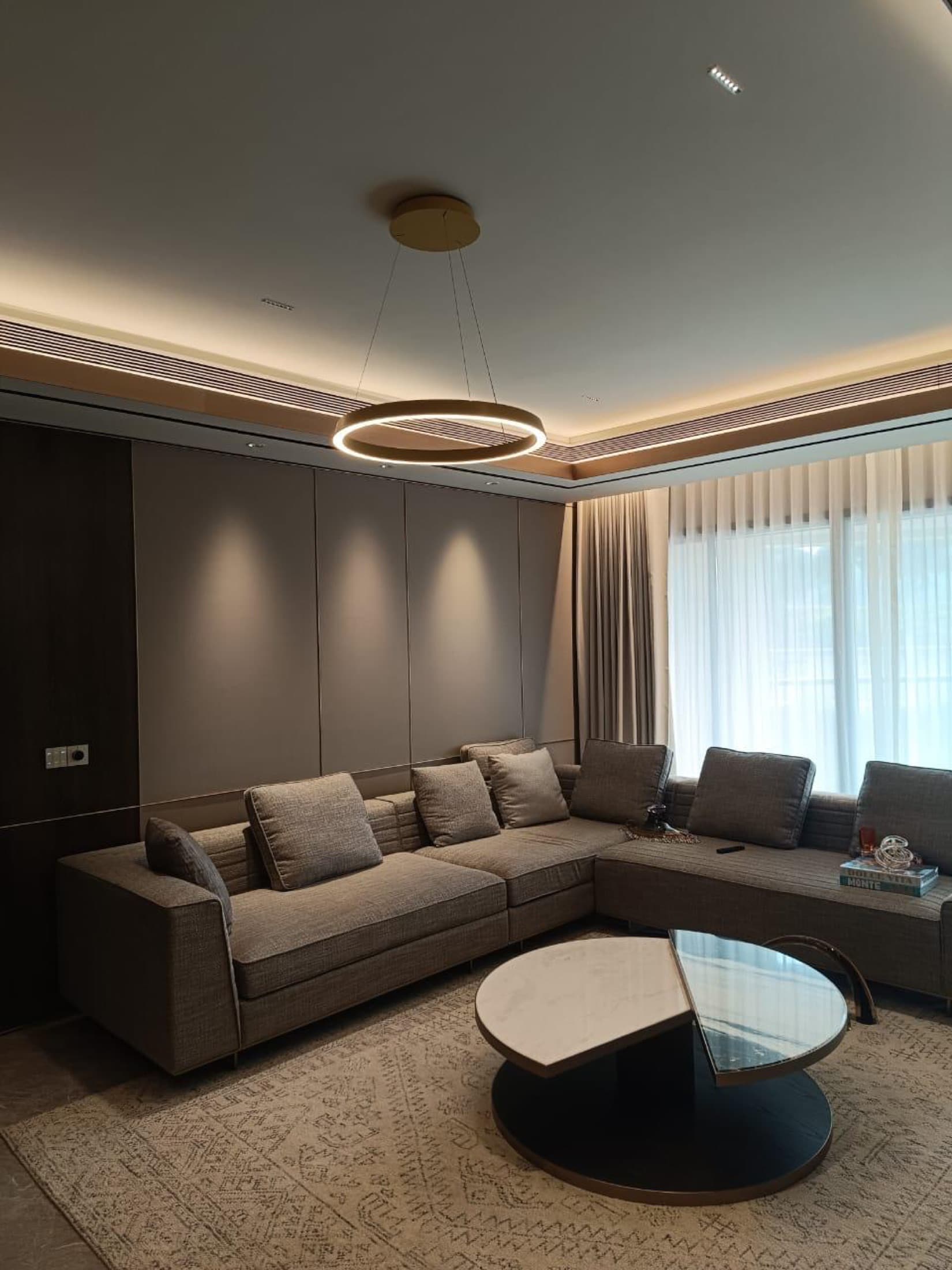
Ambient light is the base note. It fills the room and lets you move through it safely, ideally from concealed or indirect sources so you sense the brightness without seeing the fixture. Task light is the working layer, focused where something is done: a reading chair, a kitchen counter, a mirror. Accent light is the smallest quantity and the largest effect, the beam that lifts a painting, grazes a stone wall, or picks out the one object in the room that deserves attention.
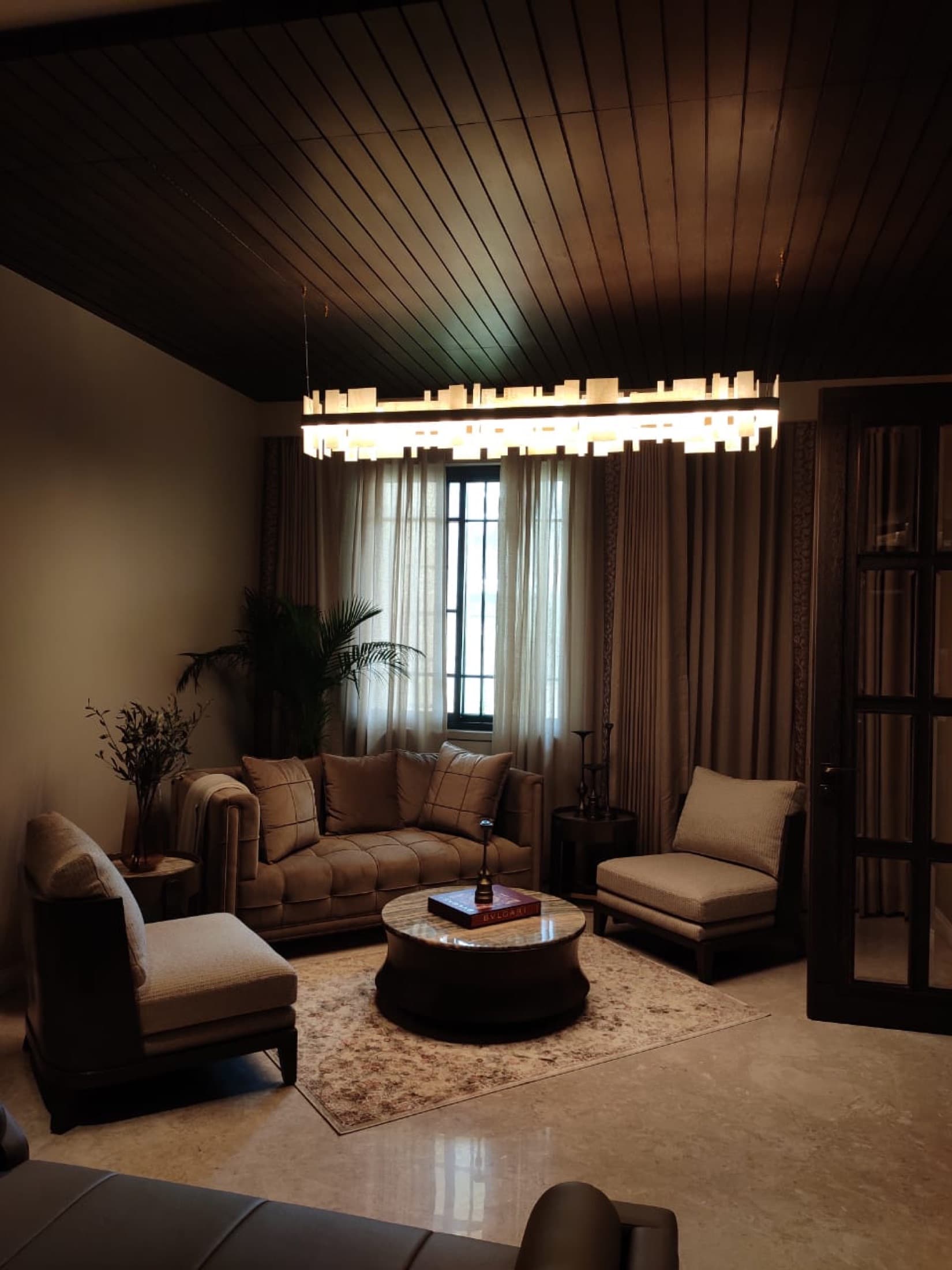
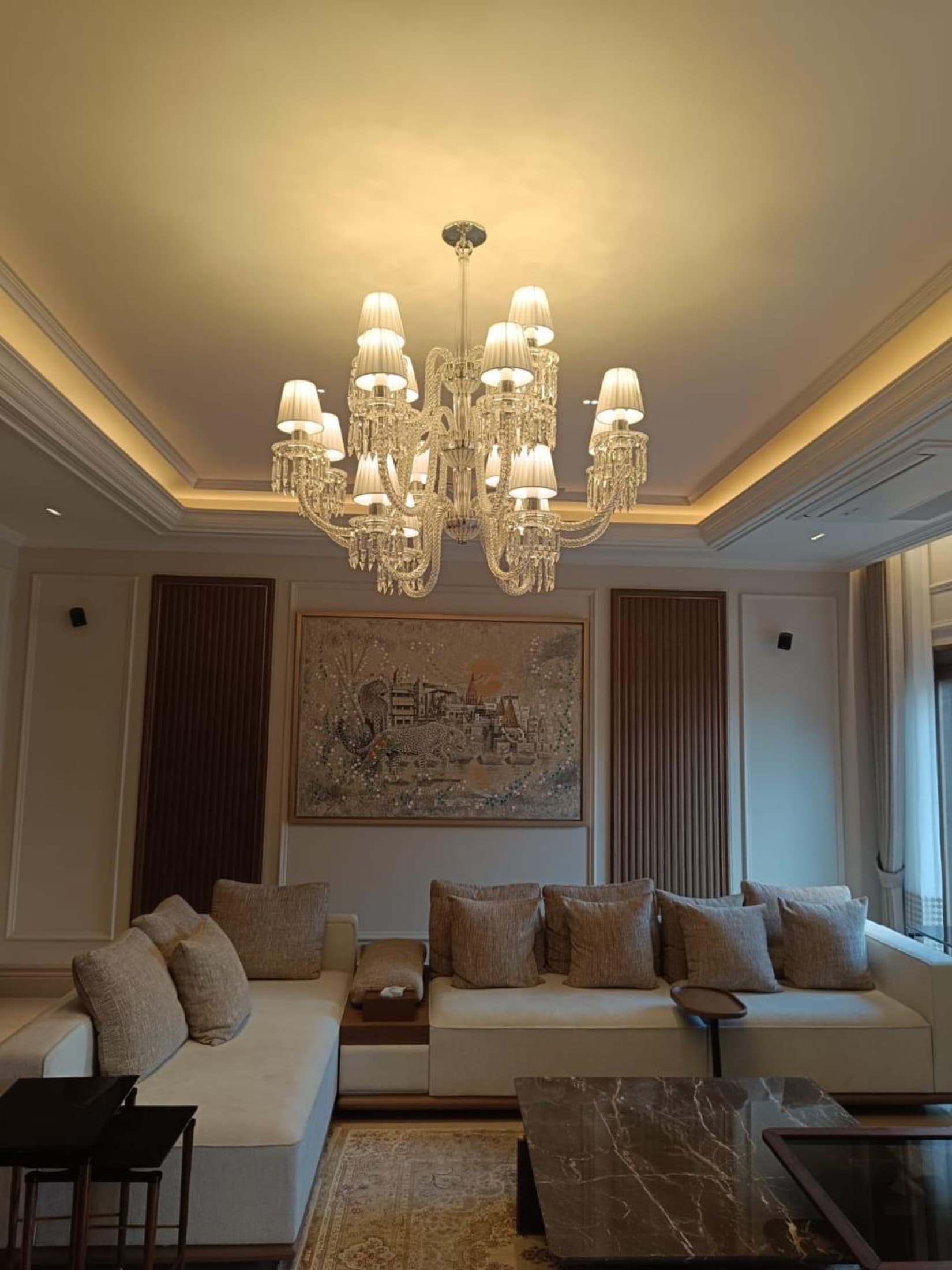
The fourth layer is decorative: the chandelier, the sculptural pendant, the fixture that is itself an object worth looking at. It contributes little to how well you can see and everything to how the room feels. A Masiero chandelier or a Bover pendant is jewellery for the ceiling, and like jewellery it works best when the rest of the composition is quiet enough to let it speak.
You do not notice good layering. You notice its absence.
Why one bright ceiling light fails
The discipline is in the proportion. A room lit only with ambient light is legible but lifeless, the flat wash of an office. A room lit only with accents is theatrical and exhausting. The pleasure is in the interval between them, in a space where your eye is gently told where to rest. Most rooms fail not from too little light but from too much of one kind, usually a grid of downlights doing every job and none of them well.
Colour temperature holds the layers together. Keep the warm white consistent across a sightline, around 2700K for the rooms where people gather, and the layers read as one composition rather than a collection of unrelated fittings.
Layers need a dimmer
The layers are only worth building if they can be re-balanced. The same dining room wants bright, even light for a working lunch and a low, warm pool over the table for dinner. Without control, a scheme has one setting and therefore one mood. With scene control, a single room holds a dozen.
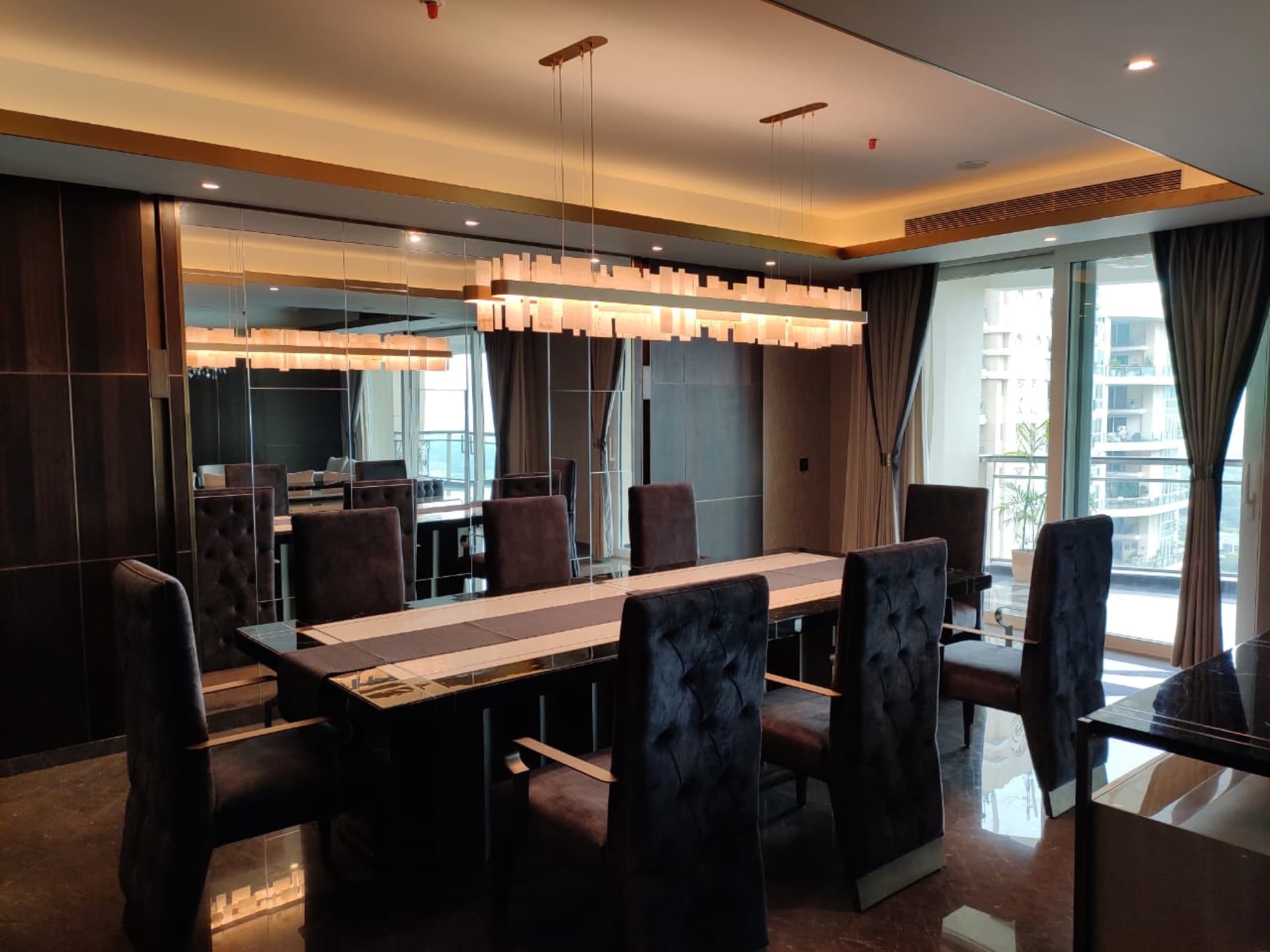
This is where a curated set of fixtures matters more than a large one. A precise recessed profile from Kreon for the ambient wash, a sculptural pendant from Vibia or Masiero for the table, a tight accent from Deltalight for the art. Different houses, different disciplines, one composition. Bringing those disciplines together under one roof is, in the end, the whole of what we do.
Layering is the foundation every other decision rests on, from the size of a chandelier to the colour of the light. It is also the hardest thing to judge from a drawing. The quickest way to understand it is to stand in a room where it has been done well, and watch what happens when the light shifts. Come see how it changes a room.