How Big Should a Chandelier Be?
The formulas for scaling a fixture to a dining table, a foyer, and a double-height void.
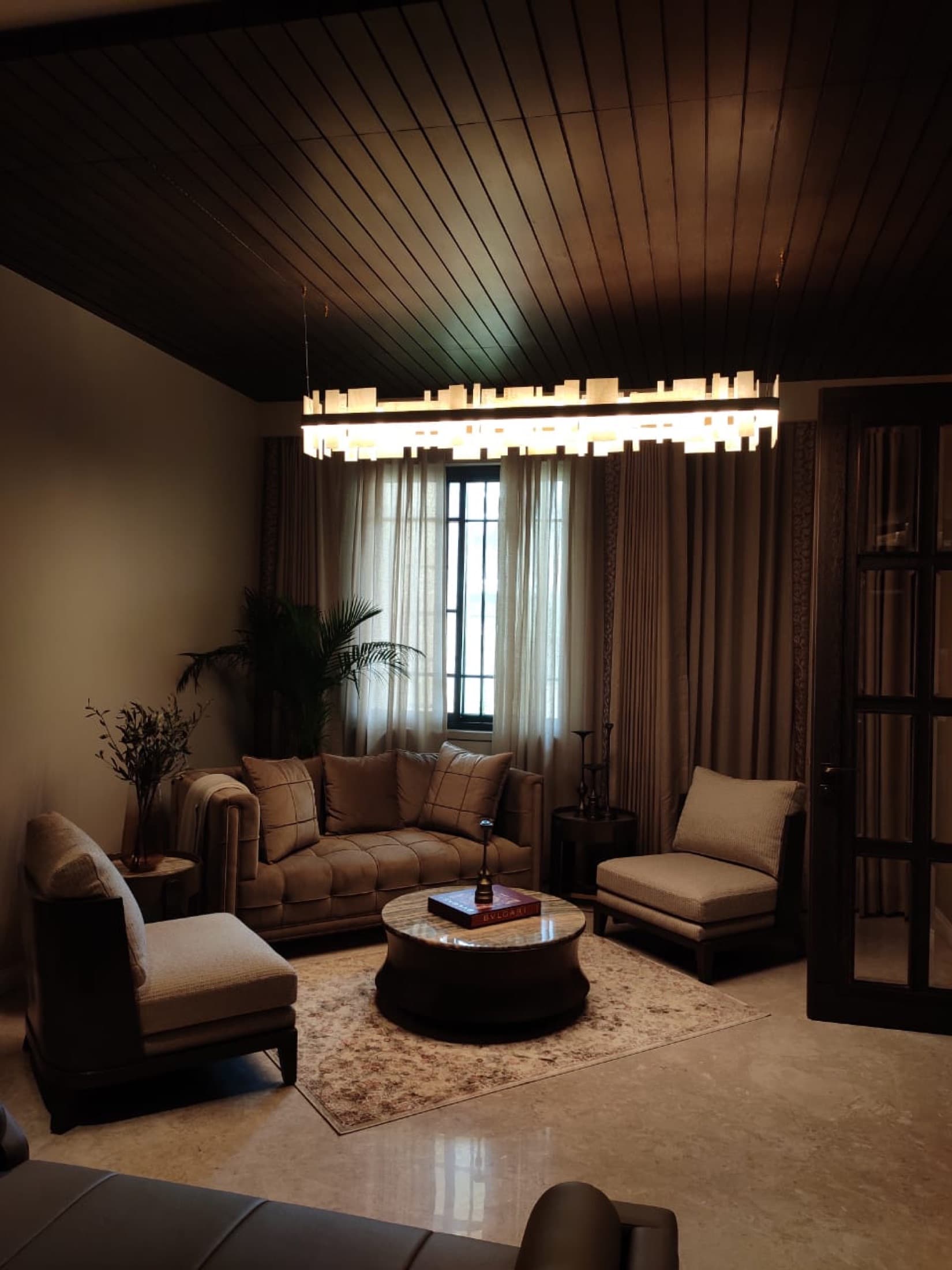
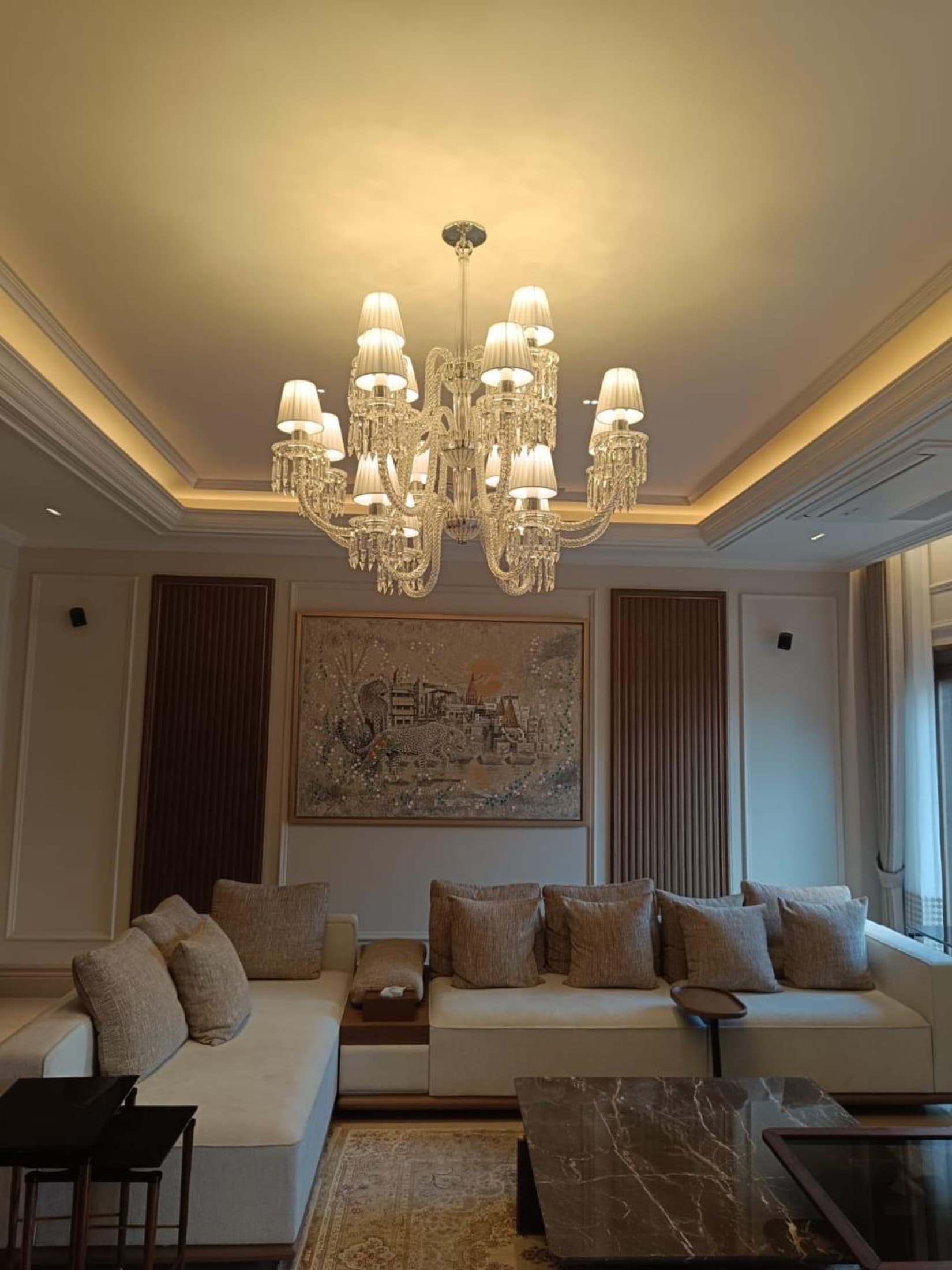
A chandelier is the one fixture a room is arranged around, so getting its size wrong is a mistake nobody misses. Too small and it reads as an afterthought, marooned in the ceiling. Too large and the room feels crowded from above. The good news is that scale is mostly arithmetic, and the arithmetic is simple.
How big should a chandelier be? The quick formula
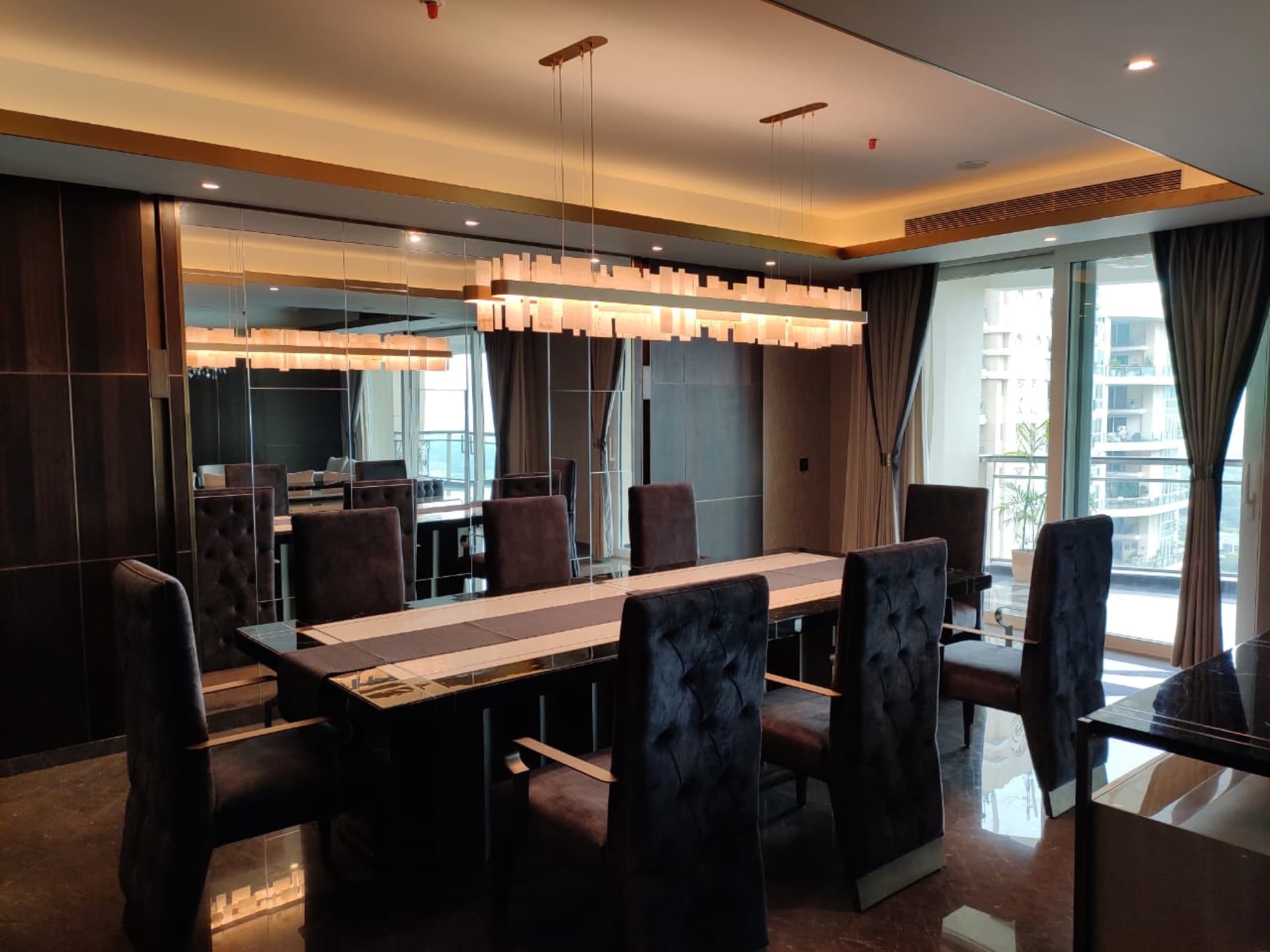
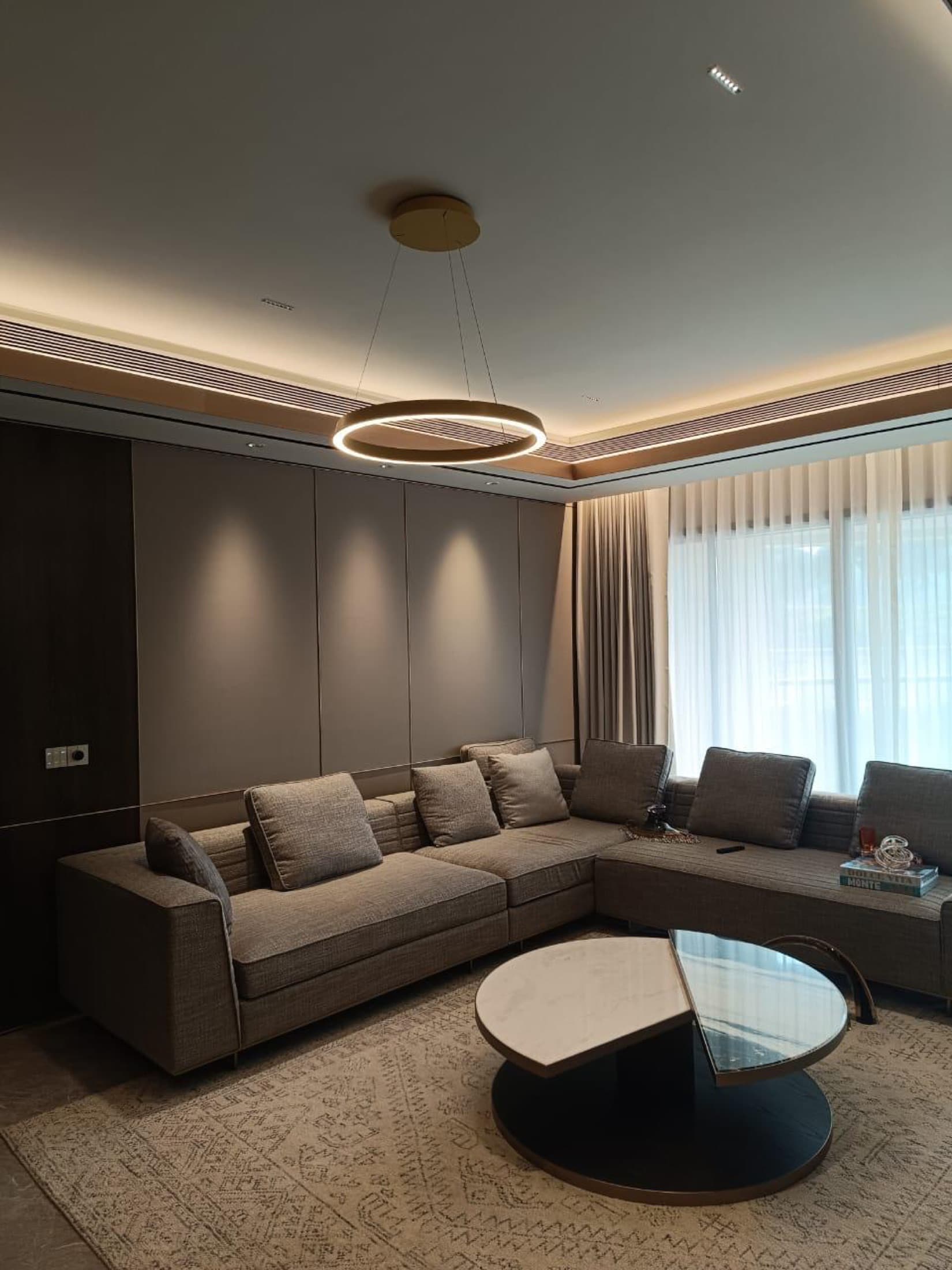
For a chandelier in the centre of a room, add the room's length and width in feet, and that number in inches is a good diameter. A 14 by 16 foot living room suggests a fixture around 30 inches wide. Over a dining table, ignore the room and size to the table instead: the fixture should be about half to two thirds of the table's width, and never wider than the table itself, so nobody meets it with their head.
How high should it hang?
Over a dining table, hang the lowest point roughly 75 to 85 centimetres above the tabletop, so it lights the table without blocking the faces across it. In an open room with a standard ceiling, keep the bottom at least 2.1 metres off the floor so people pass beneath it comfortably. For every foot of ceiling above the usual eight, raise the fixture two to three inches, which is why tall rooms carry larger, longer pieces so gracefully.
These are starting points, not laws. A wide, low-hung drum reads very differently from an open, airy cascade of the same diameter, and a piece with a lot of visual transparency, like a Vibia or a Bover, can be scaled up further before it begins to feel heavy.
Size to the table, not the room. It is the rule that saves most dining chandeliers.
Sizing for a double-height void
A double-height foyer or stairwell is where sizing turns from arithmetic into judgment. Here the fixture has to hold a tall, empty volume without crowding it, and it is read from several floors at once. A long, vertical cascade almost always works better than a single wide tier, because it occupies the height rather than fighting it, and it gives the eye something to follow as it travels up. Leave generous space above head height on the ground floor, and let the piece fall to roughly the level of the first-floor landing so both storeys have something to look at.
The measurements get a room most of the way, but the last decision, whether a piece feels right in a particular volume, is one you make with your eyes, not a tape measure. It is the reason we hang our chandeliers at full height in the Experience Centre. Come see how it changes a room.