Choosing Outdoor Architectural Fixtures That Last
IP ratings, materials, and the long game of specifying for the Indian outdoors.
Indoors, a lighting fixture faces dust and time. Outdoors, in the Indian climate, it faces monsoon, salt-laden air, forty-degree heat, and the slow corrosion of neglect. The most beautiful garden scheme is worthless if half of it has failed by its third summer. Outdoor specification is, before anything else, a question of what survives.
Read the two numbers
Every outdoor fixture carries an IP rating, two digits that describe its resistance to solids and to water. The first digit is dust, the second is moisture. For a wall or bollard exposed to rain, IP65 is a sensible floor. For anything that might sit in standing water, near a pool edge, or in a fountain, you want IP67 or IP68 and a manufacturer who tests to it honestly. The rating on the datasheet is only as good as the engineering behind the seal.
Just as important is what the fixture is made of. Marine-grade stainless steel, anodised aluminium, and properly treated finishes are the difference between a fitting that patinas gracefully and one that streaks with rust in a single season. The European outdoor houses we work with, Simes and Bover among them, earn their specification precisely because they treat the body of the fixture as seriously as the light it throws.
Outdoors, you are not buying a light. You are buying a decade.
The long game
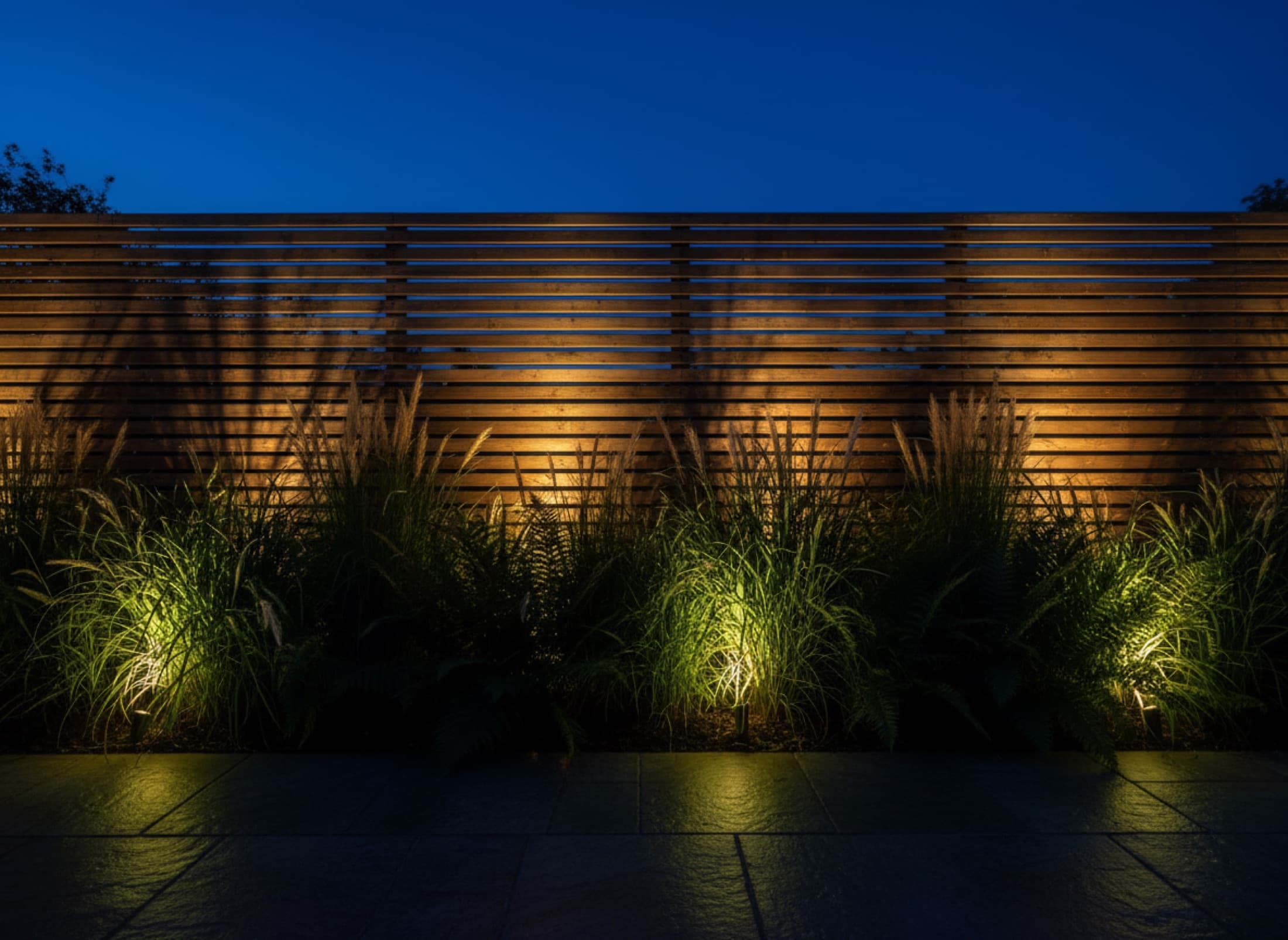
Good outdoor lighting extends the architecture into the night, a facade grazed to reveal its texture, a path drawn in pools of warm light, a tree lit from below so the garden does not simply end at the glass. That effect is only worth designing if it endures. We specify outdoor schemes the way one plants a garden: for how they will look not this season, but in ten.
It is the least glamorous discipline in lighting and, for a home meant to last, one of the most important.